
Land Lessons · Nature and place

Bison and the grasslands

An animal that changes the land around it

Discover how bison, grasses, water and people are connected, and why returning bison matters in Saskatchewan.

Start the story Create a lesson →
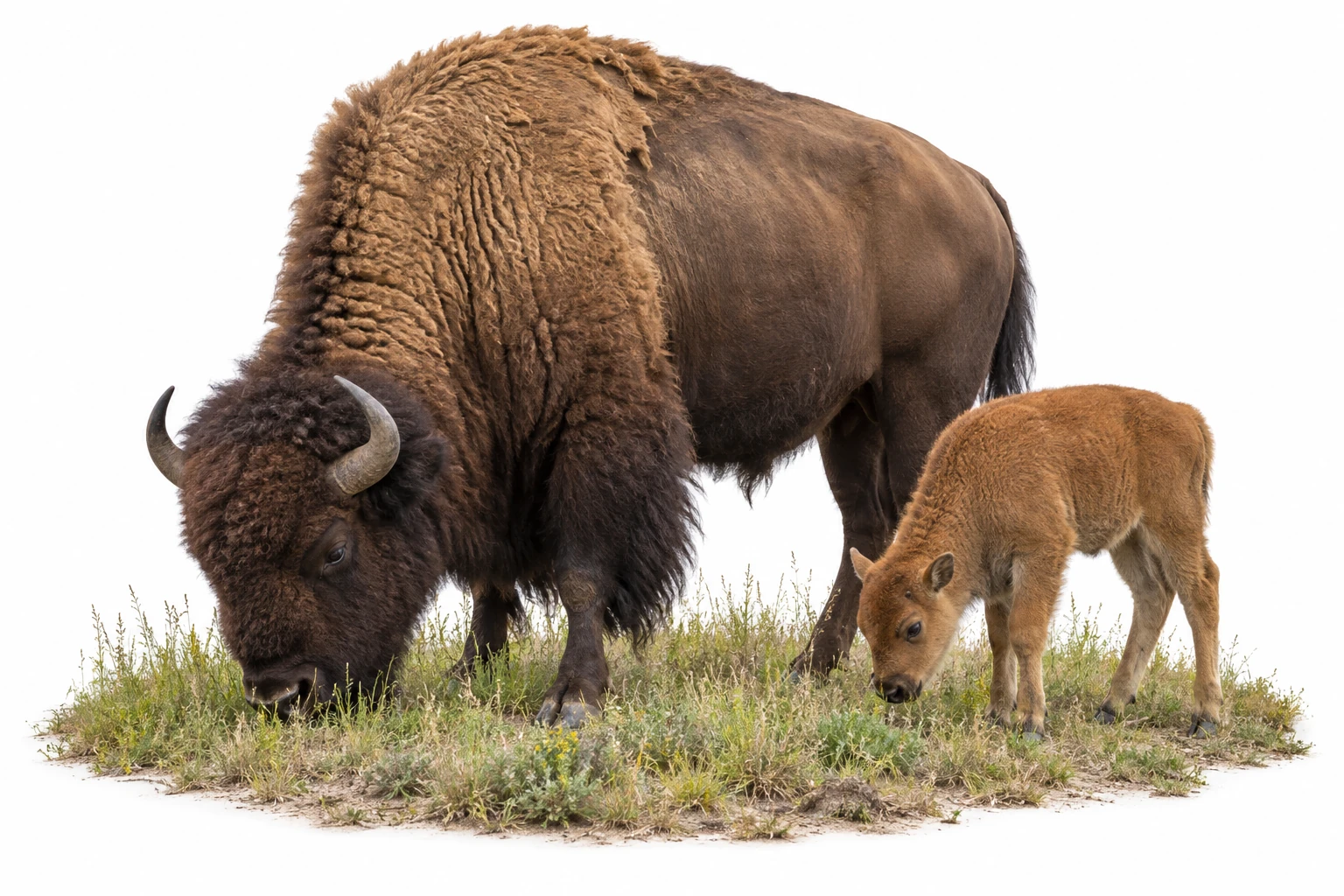
Illustration on white: Plains bison and grassland ecology.
Illustration • Plains bison and grassland ecology. Ecological illustration informed by Wanuskewin’s bison-restoration account. Not a photograph of its herd, a measured plot or a particular historical hunt.

A question to carry
as you read

What changes in a grassland when bison return?

Words along the way

Habitat
The place and conditions in which an organism lives.
Herbivore
An animal that eats plants.
Wallow
A shallow hollow made where an animal rolls on the ground.
Restoration
Work to help a damaged ecosystem recover.

01 · Look closer

Grassland is a living community

A grassland is more than a field of grass. Plants, animals, soil and water interact there. Plains bison eat vegetation and change the places where they feed. Parks Canada describes bison as a keystone species: their activities help shape the habitat used by other living things.

Read the sources: Plains Bison: Grasslands National Park

02 · Ecological work

Eating and rolling change habitats

Grazing creates patches of vegetation with different heights. Bison also roll on the ground, forming wallows. Rain or melting snow can collect in these hollows. At Grasslands National Park, such places can support moisture-loving plants and insects. A bison’s everyday behaviour can therefore affect more than its own food supply.

Read the sources: Plains Bison: Grasslands National Park

03 · Relationships

Bison supported life on the Plains

For Northern Plains Indigenous peoples, bison provided food, materials for tools and materials for shelter. Wanuskewin’s teaching programs explore this knowledge. The relationship also has cultural and spiritual meaning. Follow named community sources when learning about those meanings; a list of useful body parts cannot explain the whole relationship.

Read the sources: Tipi Walk and Northern Plains Technology · Bison

04 · Change over time

The herds nearly disappeared

By the 1880s, overhunting had brought the great plains herds close to extinction. Their loss disrupted grassland ecosystems and Indigenous livelihoods. Recovery has taken sustained work. In December 2005, plains bison returned to Grasslands National Park after an absence of about 120 years.

Read the sources: Plains Bison: Grasslands National Park

05 · Saskatchewan today

Restoration is happening here

Bison returned to Wanuskewin in December 2019 through a partnership with Parks Canada. Wanuskewin describes the herd as part of renewing relationships among people, animals, land and spirit. The centre is also restoring former agricultural fields to native grassland. Cultural renewal and ecological restoration are connected parts of this work.

Read the sources: Bison · Land: grasslands and archaeology

Follow the dates

The story through time.

  1. 2005

    Return to Grasslands National Park

    Plains bison are reintroduced in December. The return creates opportunities to restore ecological relationships.

    Read the sources: Plains Bison: Grasslands National Park

  2. 2019

    Return to Wanuskewin

    Wanuskewin welcomes bison in December as part of its cultural and grassland restoration work.

    Read the sources: Bison

Your turn

Draw a habitat connection map

  1. Start with grass, bison, a wallow and insects. Add people in a different colour.
  2. Use solid arrows for feeding relationships and dotted arrows for habitat changes. Label every arrow.
  3. Predict one effect of removing bison and one possible effect of their return.
  4. Use two sources to support the map. Mark any connection that still needs research.

Show what you learned. A labelled relationship map and two reasoned predictions. Learners distinguish eating from changing another species’ habitat.

Optional classroom notesFor teachers: Saskatchewan connections

These are suggested connections to specific outcomes. Use the linked curriculum and the scope notes to plan the rest of the learning.

Grade 4 · Science

HC4.1

Explore connections among organisms, people and the habitats they share.

Relevant indicators

  • f Identify organisms’ feeding roles.
  • g–h Represent feeding relationships and examine how chains join into webs.
  • k Predict effects when a population is removed.
Classroom activity
Begin with the lesson connection map. Research local grassland producers, consumers and decomposers, then turn the feeding connections into a food web. Use a different arrow style for bison’s physical changes to habitat. Predict one consequence of removing bison.
Evidence of learning
A sourced food web, a key distinguishing feeding from habitat effects, and a reasoned short- or long-term prediction.
Scope of this connection
The story introduces relationships; it does not supply a complete food web. Students need additional species evidence. Other HC4.1 indicators, including maintaining a habitat and community-led worldview learning, require separate work.

Suggested connection · Source checked 2026-09-27

Keep exploring

The evidence behind the story

Sources & further reading.

Sources checked 2026-09-27.

  1. Plains Bison: Grasslands National ParkParks Canada

    Park-specific reintroduction history and ecological effects of grazing and wallowing.

  2. BisonWanuskewin

    Wanuskewin explains its own conservation herd and cultural purpose.

  3. Land: grasslands and archaeologyWanuskewin

    The centre describes restoration of former agricultural fields and its relationship with the land.

  4. Tipi Walk and Northern Plains TechnologyWanuskewin

    Community cultural centre describing its Plains Cree programs and attribution to Elder Mary Lee. Program details can change.

Introductory ecosystem account, not a complete food web or a full explanation of the historical destruction of bison. The activity requires further local species research for a full food-web investigation. Community spiritual teachings are not reproduced. The final inquiry is an original classroom prompt.

Illustration note. Illustration • Plains bison and grassland ecology. Ecological illustration informed by Wanuskewin’s bison-restoration account. Not a photograph of its herd, a measured plot or a particular historical hunt.