
A shared symbol.
Distinct peoples.
The Union Jack is part of this flag’s story. First Nations brought their own nationhood to Treaty. Follow how the design developed, then what the relationship means.
ILLUSTRATED HISTORY · TREATY 6
A flag. A promise.
A living relationship.
Follow its colours through history. See the people, places and Treaty relationship behind the design—and the connection to flags around the world.
Scroll into the story Explore the medal →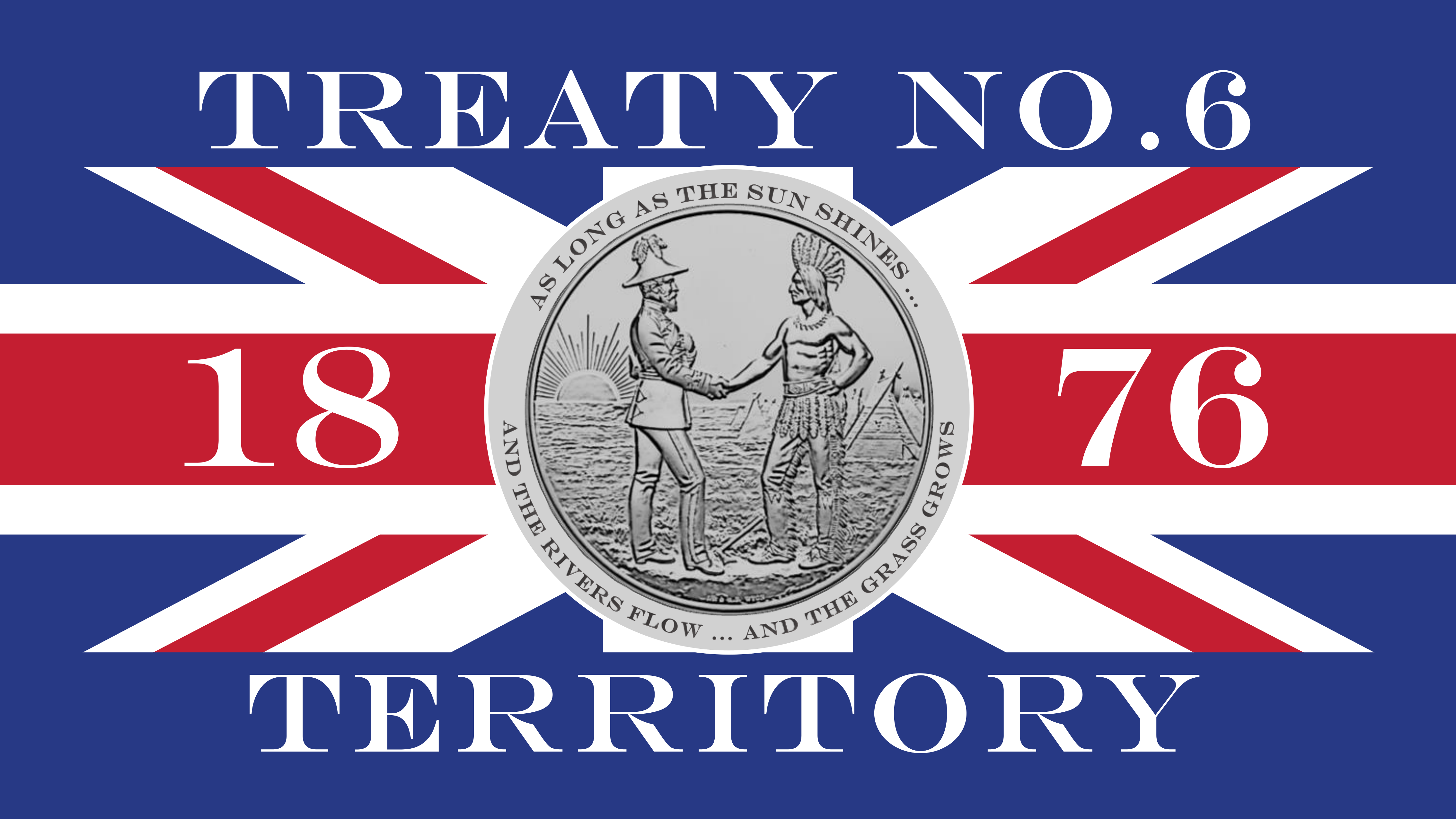
A shared symbol.
Distinct peoples.
The Union Jack is part of this flag’s story. First Nations brought their own nationhood to Treaty. Follow how the design developed, then what the relationship means.
TREATY 6 · 1876
Turn the medal to view the handshake and Queen Victoria portrait.
Silver · 76.4 mm diameter · J.S. & A.B. Wyon
Open the medal viewer →BEFORE 1876
Long before Treaty Six, First Nations had languages, laws, governance and relationships with the land. Their histories do not start at a treaty table.
The Confederacy of Treaty No. 6 First Nations describes Treaty-making as an agreement between existing Nations. Entering Treaty did not create their nationhood.
The story begins with people, place and belonging.
Learn from the Confederacy’s Treaty history ↗
1606 · THE FIRST UNION FLAG
England’s flag carries the red cross of St George. Scotland’s carries the white diagonal cross of St Andrew.
In 1603, James VI of Scotland also became James I of England. In 1606, a royal flag combined their crosses. The kingdoms shared a monarch; their parliamentary union followed in 1707.
England’s flag and the Union Jack are different flags.
Source: The Royal Household · Union Jack ↗ · UK Parliament · Union of the Crowns ↗
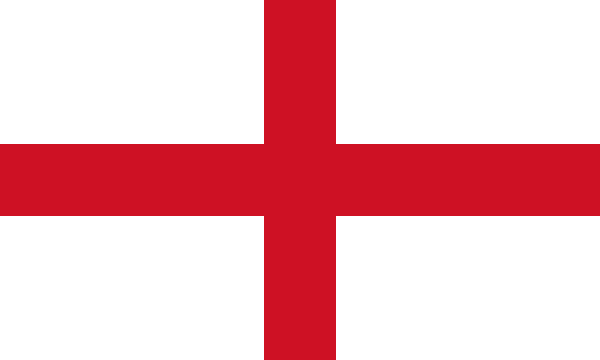 EnglandSt George’s cross
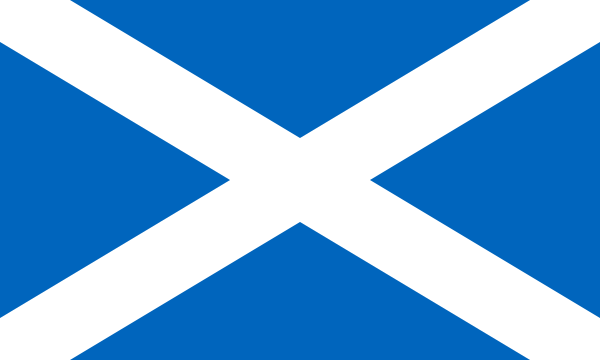 ScotlandSt Andrew’s cross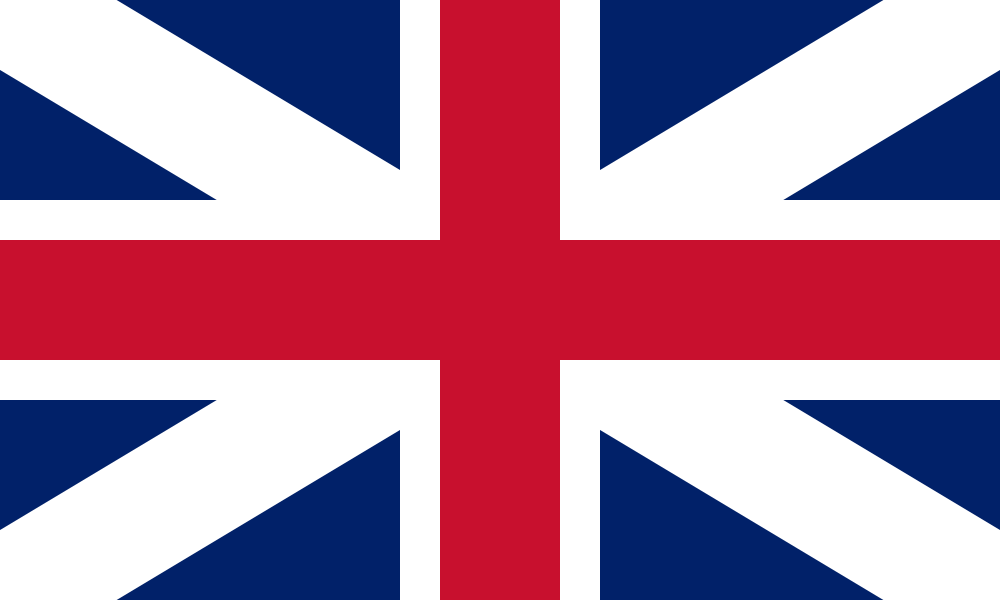
A CLOSER VIEW · THE MATERIAL
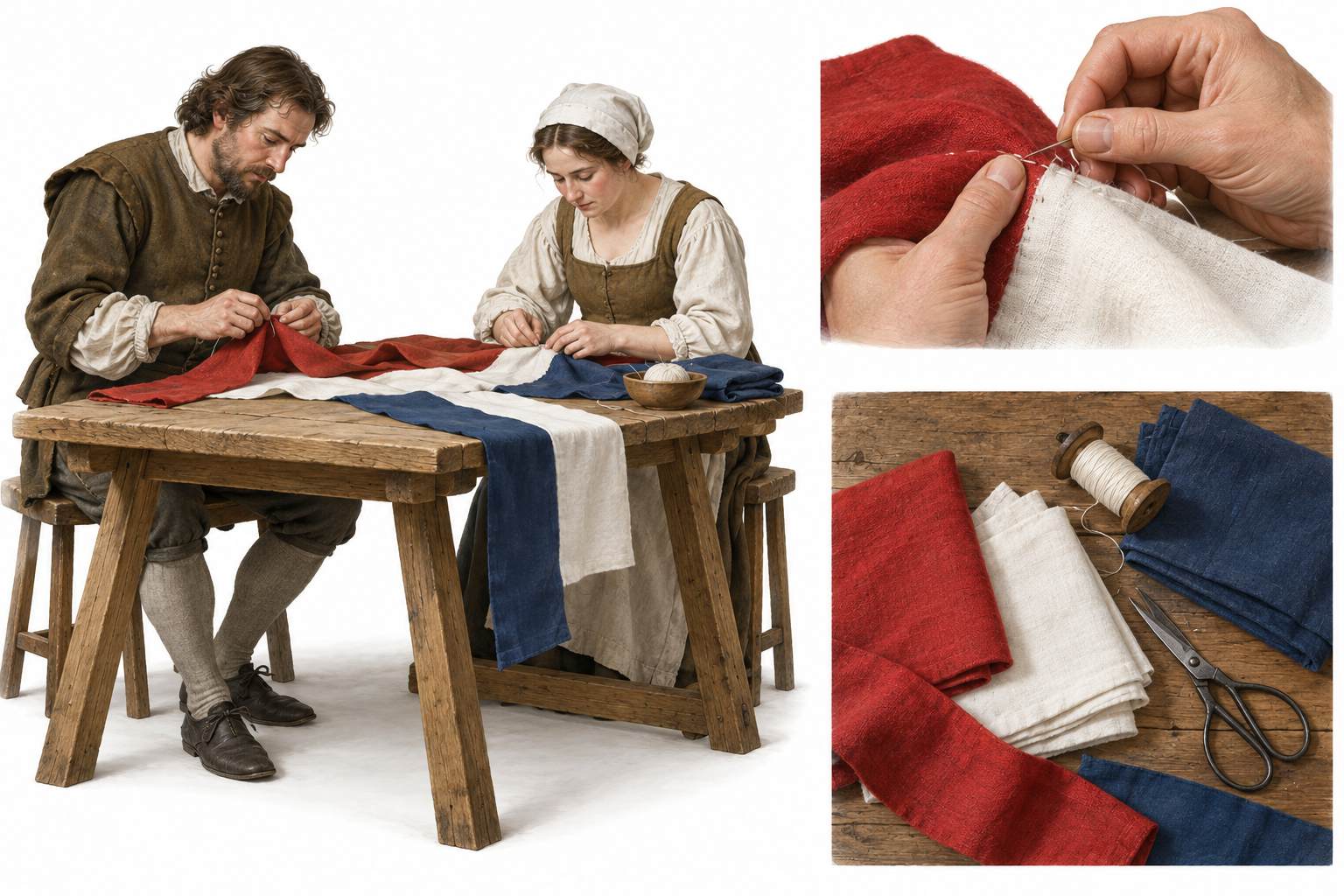
A flag makes a design visible on cloth. These views show pieces, stitching and finished seams so you can picture how separate colours can become one object.
The illustration explains a craft process. The people and workshop are imagined; they are not documented makers of the 1606 flag.
The design is historical.
The workshop is illustrative.
1801 · ANOTHER LAYER
When Great Britain and Ireland united in 1801, the red diagonal cross associated with St Patrick was added. This created the familiar Union Jack design.
St Patrick’s cross is a historic symbol used for Ireland here. It is not the present Republic of Ireland’s flag. Wales has no separate symbol in this design.
Union Flag1606 design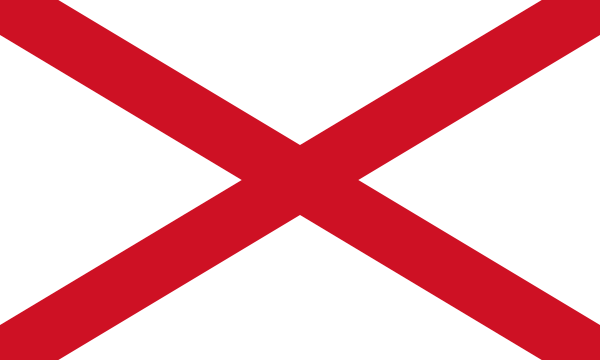 St Patrick’s crossHistoric Ireland symbol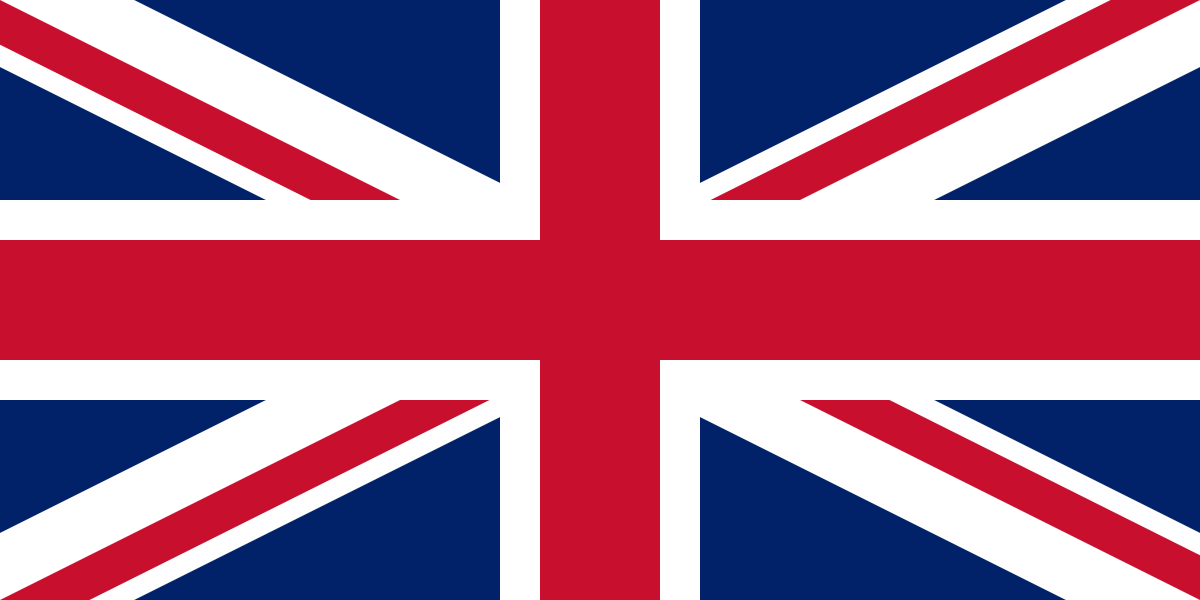
1876 · TREATY SIX
Treaty Six was concluded near Fort Carlton on 23 and 28 August, and near Fort Pitt on 9 September 1876. Other Nations joined through later adhesions.
The written Treaty promised a flag and medal to each recognised Chief. In his teaching about the flag, Tyrone Tootoosis Sr. identifies the flags presented to signatory Chiefs as Union Jacks.
The written document is one record. First Nations’ oral histories and understandings are essential to learning what Treaty means.
AUGUST 1876 · THE CARLTON COUNCIL
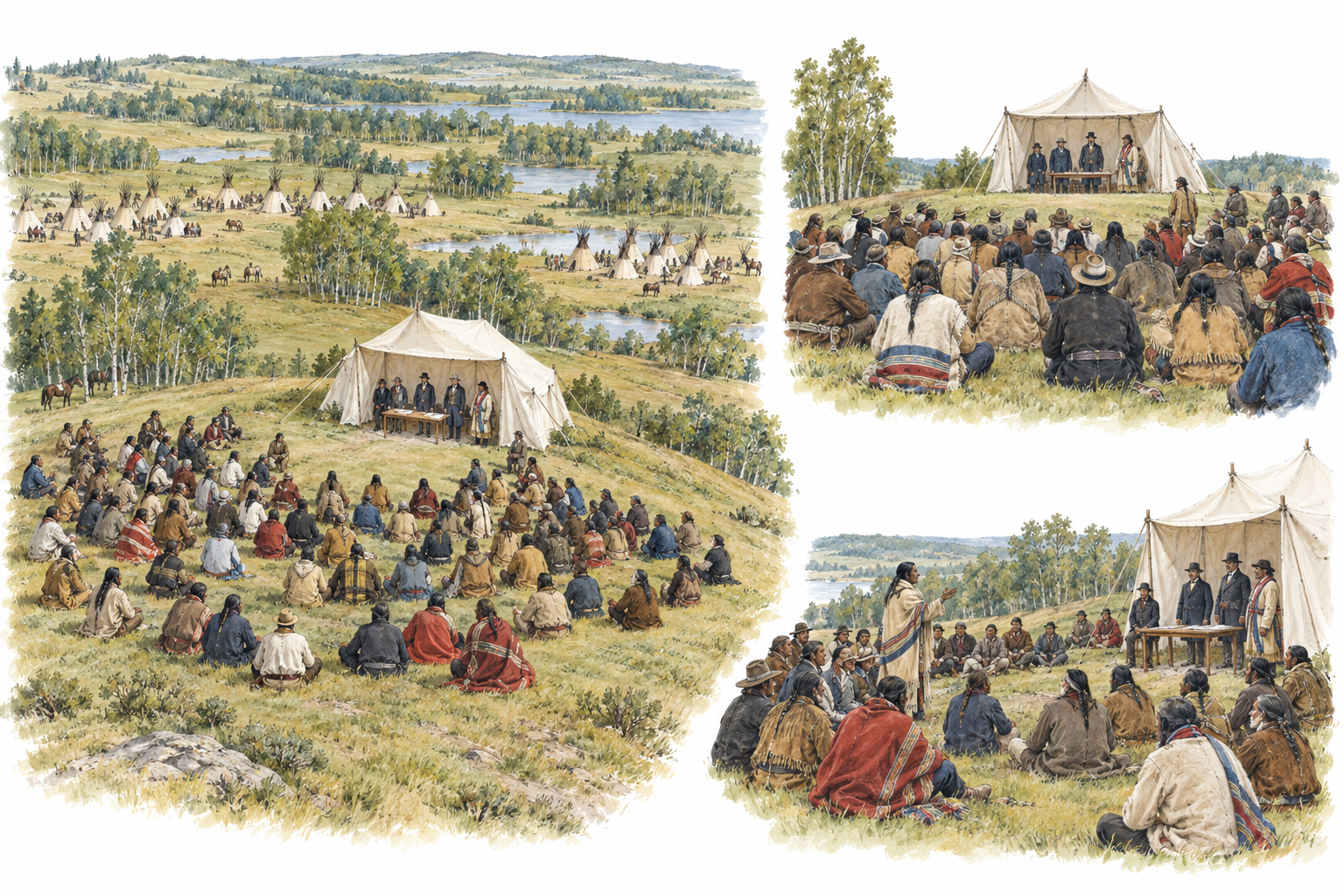
Peter Erasmus recalled a large semicircle of people seated on the grass before the Governor’s tent, which stood on a slight rise outside Fort Carlton.
Morris placed the Cree camp about two miles from the fort, amid trees, hay marshes and small lakes. These accounts guide the setting shown here.
Mistawasis and Ahtahkakoop were leading Cree negotiators. The Crown commissioners were Alexander Morris, James McKay and William J. Christie. Métis interpreter Peter Erasmus played a crucial role. Negotiations involved many more leaders and community members than a small table meeting.
This illustration reconstructs the documented setting. Faces, exact clothing, the number of visible people and precise placement are not established. It shows discussion, not a reenactment of ceremony. Fort Pitt was a separate September gathering.
Erasmus’s recollections ↗ · Morris’s account ↗ · Ahtahkakoop Cree Nation ↗ · OTC biographies ↗
THE CONTEMPORARY FLAG
The contemporary Treaty Six flag places a treaty medallion and 1876 over the Union Jack, with the words Treaty No. 6 Territory.
These elements remember Treaty. This is a modern design—not an image of the flag handed out in 1876.
Public flag raisings are documented by 2013. That tells us it was in use then; it does not establish its original designer or exact creation date.
University flag raising, 2013 ↗ · Saskatoon Tribal Council report ↗
THE MEDAL & THE MEANING
In Tyrone Tootoosis Sr.’s explanation, the medal’s handshake speaks to friendship and respectful relations. The sun, grass and river imagery expresses the enduring nature of those commitments.
The Confederacy identifies continuing responsibilities, including Treaty provisions concerning education, the medicine chest and help during famine and pestilence.
A relationship to understand.
A promise to keep learning about.
Read Tootoosis’s full teaching ↗ · Confederacy’s Treaty principles ↗
SHARED SHAPES · DISTINCT HISTORIES
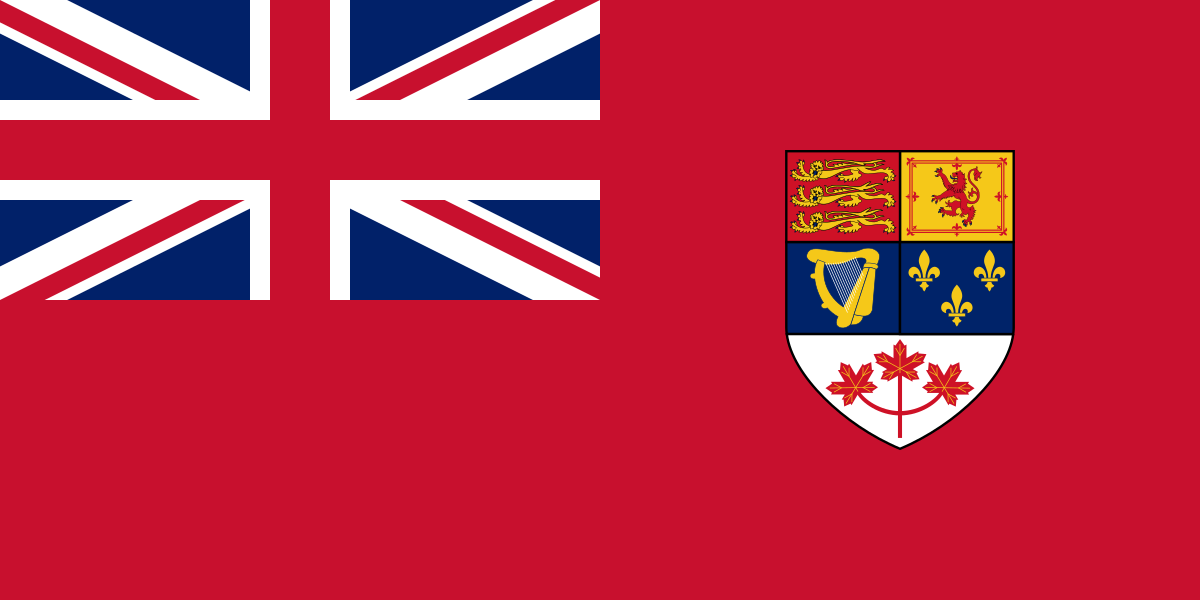
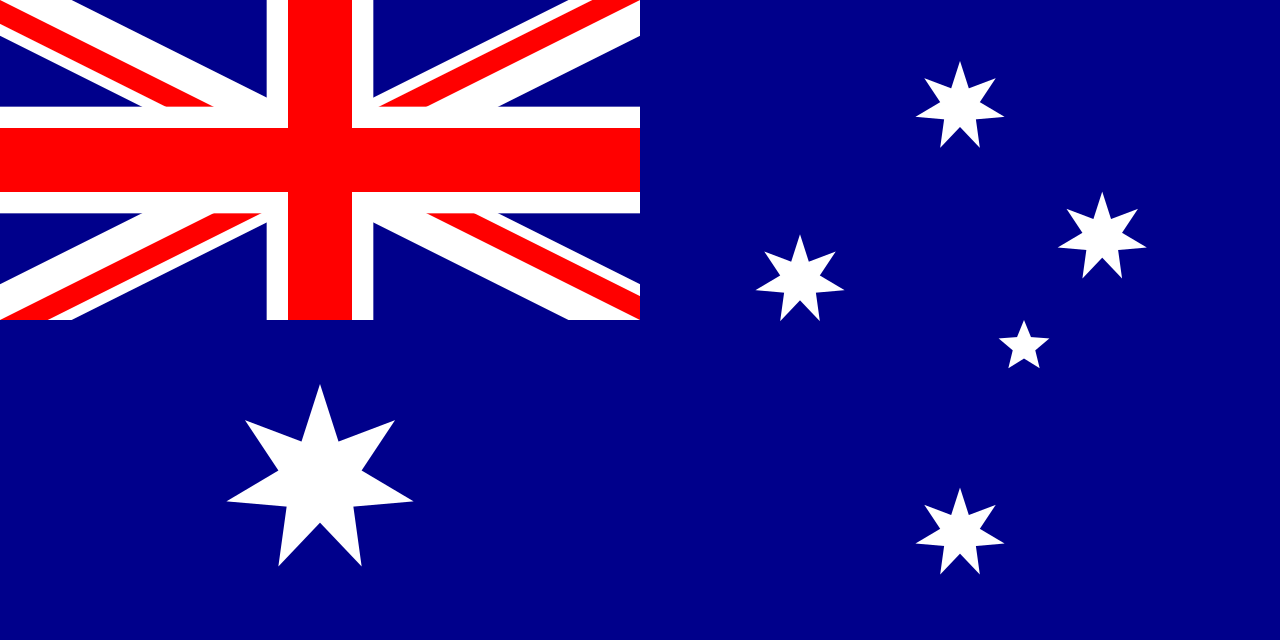
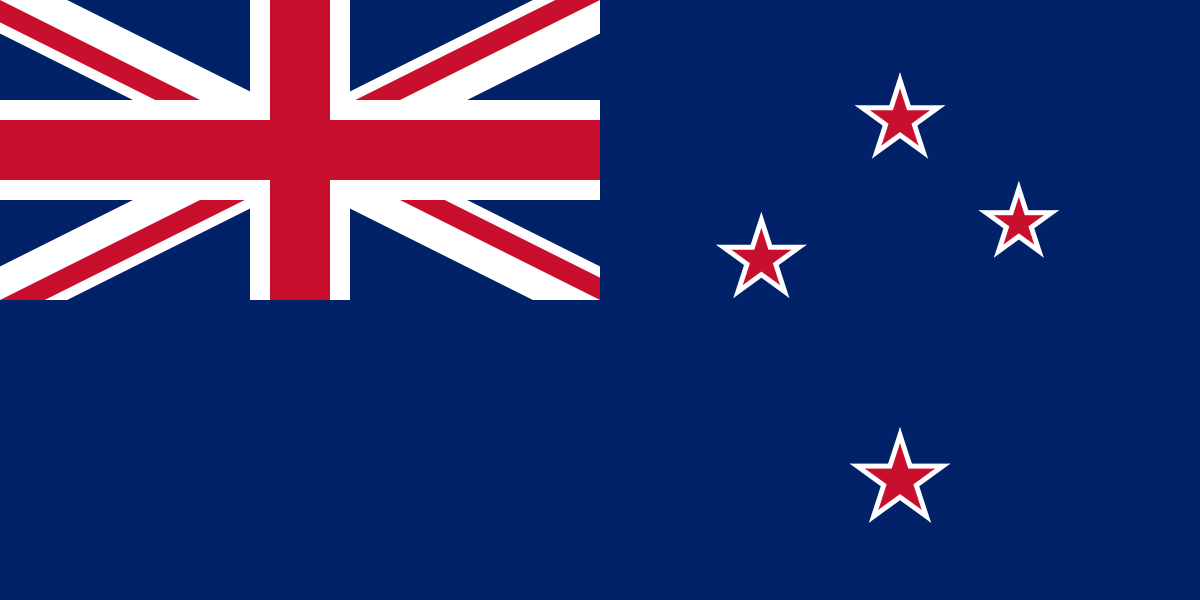
The Union Jack fills the Treaty Six flag’s background. On the Canadian Red Ensign, Australian flag and New Zealand flag, it occupies the upper-left quarter, called the canton.
These designs record different relationships with the Crown and British history. They do not descend from Treaty Six or make their peoples one ancestry.
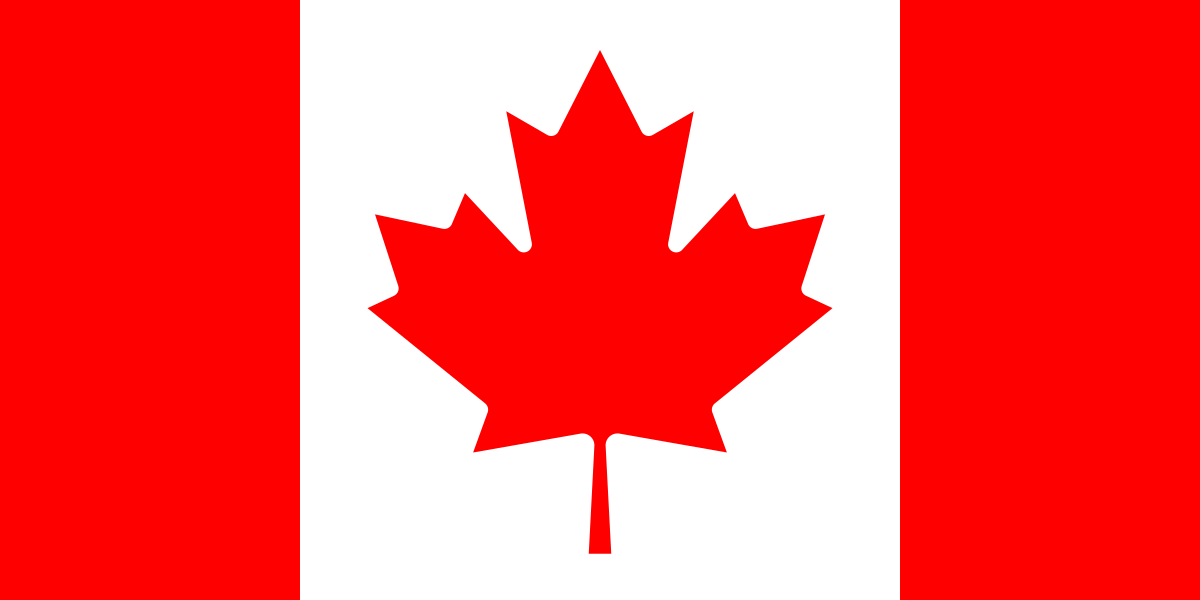
England’s flag is one part of the Union Jack. Today’s Canadian flag has its own maple leaf design.
A LIVING RELATIONSHIP
Treaty Six can hold pride in ancestors who negotiated as Nations, and in people who carry the relationship forward.
The Office of the Treaty Commissioner teaches that we are all Treaty people. First Nations and other people living on Treaty land have a relationship to understand and responsibilities to uphold. That relationship is not a skin colour.
First Nations’ specific Treaty rights and distinct nationhood remain central. Colonial harms and unfulfilled promises are also part of the history we need to understand.
Know the history.
Honour the relationship.
Carry it forward.
Office of the Treaty Commissioner ↗ · Confederacy’s Treaty principles ↗
This educational resource brings together public records and attributed First Nations explanations. It does not speak on behalf of a Nation. Source review: 27 September 2026.
Treaty Six flag rendering: Srdkurtz / Wikimedia Commons, CC0. The medal detail is a magnified view of this rendering. This is a user-created rendering, not an official design master.
Generated artwork: white-background craft and council plates. The council setting follows Erasmus and Morris; exact faces, dress and placement are unverified. The workshop is illustrative. No modern portraits are used. Read the reconstruction evidence.
Design-history limit: No primary record identifying the contemporary flag’s original designer or exact creation date was established. This story explains the visual connection and historical relationship; it does not claim an unbroken chain of ownership of one physical flag.
Additional flag artwork and provenance: asset credits. Detailed research: Treaty Six source notes and flag-history source notes.